Glucoamylase Starch Supplier for Maltodextrin: Specification Checklist

Compare glucoamylase starch suppliers for maltodextrin by activity, pH, temperature, dosage, COA/TDS/SDS, pilot data, and cost-in-use.

Glucoamylase Starch Supplier for Maltodextrin: Specification Checklist

For maltodextrin producers, the right Maltase/Glucoamylase choice is not the highest activity on paper; it is the enzyme that delivers the target DE, sugar profile, filtration behavior, and cost-in-use under your plant conditions.

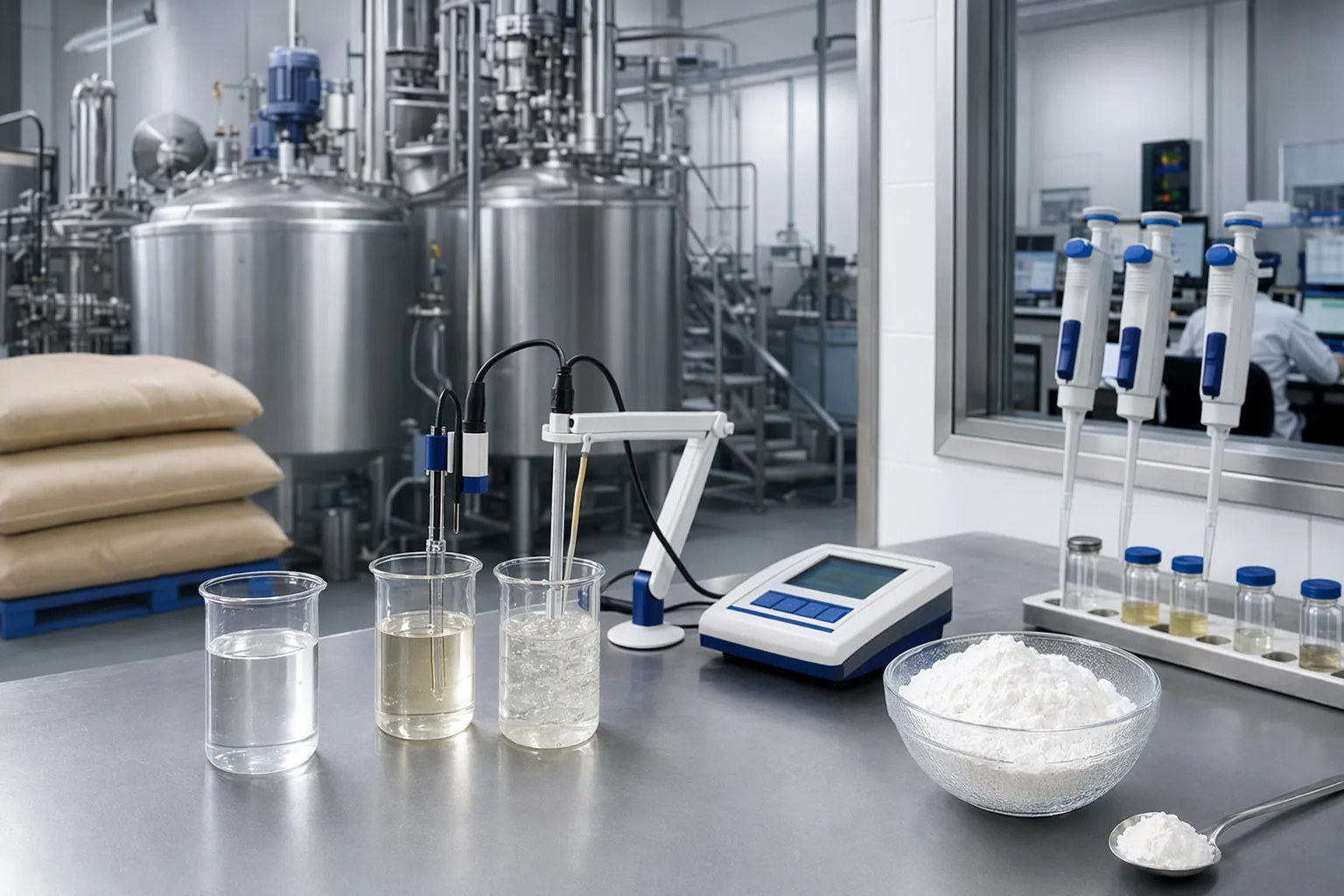
glucoamylase starch supplier for maltodextrin checklist showing DE target, sugar profile, filtration, cost-in-use

Why supplier comparison matters for maltodextrin

Choosing a glucoamylase starch supplier for maltodextrin is a process decision, not a simple purchasing exercise. Maltodextrin normally requires controlled hydrolysis, consistent DE, low off-spec risk, and predictable downstream behavior in evaporation, drying, and blending. A strong supplier should explain how its AMG enzyme or maltase enzyme performs on your starch source, liquefaction profile, dry solids, and residence time. For comparison projects, ask each supplier to define the activity unit, test method, recommended pH and temperature range, inactivation conditions, and expected impact on glucose, maltose, DP3+, and final DE. This is especially important when the same plant also evaluates a glucoamylase starch supplier for glucose syrup or a glucoamylase starch supplier for brewing, because the best operating point may differ sharply by product target.

Match enzyme selection to DE target and saccharification time. • Compare performance on the same liquefied starch substrate. • Avoid relying only on activity labels without method details.

Core specification checks for Maltase/Glucoamylase

A reliable glucoamylase supplier for maltodextrin should provide a complete technical package before commercial quotation. The TDS should list enzyme type, activity, appearance, solubility or dispersibility, recommended storage, pH range, temperature range, and suggested dosage. The COA should confirm batch activity and basic quality checks, while the SDS should cover handling, exposure controls, and storage precautions for plant safety teams. For industrial glucoamylase starch maltodextrin trials, typical screening may start around pH 4.0-5.5 and 55-65°C, with dosage bands such as 0.05-0.30% on dry starch or a supplier-defined activity dose. Exact dose depends on enzyme strength, substrate, solids, DE target, and holding time, so it must be verified in your process.

Request COA, TDS, and SDS for the exact grade offered. • Confirm activity units and assay conditions. • Check storage stability for your warehouse temperature. • Ask whether the product is liquid or powder and how it is dosed.

glucoamylase starch supplier for maltodextrin specification diagram with starch hydrolysis flow and pH-temperature windows

Pilot validation and quality control plan

Before approving a maltase enzyme supplier for maltodextrin, run pilot validation with the same starch, liquefaction enzyme, dry solids, pH adjustment method, and process water used in production. Track time-to-DE, reducing sugar, glucose percentage, viscosity, iodine reaction where applicable, filtration rate, color, odor, and microbial indicators. For maltodextrin, the goal may be a narrow DE band rather than full saccharification, so sampling frequency matters. Test at least a low, target, and high dosage, then evaluate whether small deviations in pH or temperature create unacceptable DE drift. Include enzyme inactivation verification if heat treatment is used. The best industrial glucoamylase starch maltodextrin supplier will help interpret pilot data without forcing a one-size-fits-all dosage recommendation.

Sample at defined intervals, such as 30, 60, 120, and 180 minutes. • Compare DE, glucose, maltose, viscosity, and filtration behavior. • Confirm inactivation conditions before downstream concentration or drying.

Cost-in-use: the metric that beats price per kg

For comparison sourcing, cost-in-use is more useful than the enzyme drum price. A concentrated AMG enzyme may cost more per kilogram but require a lower dose, produce faster conversion, reduce holding time, or improve batch consistency. Conversely, a lower-priced product may increase rework, extend saccharification, or create variability in DE and spray dryer performance. Calculate enzyme cost per metric ton of dry starch or finished maltodextrin, then add the value of yield, cycle time, energy, labor, QC testing, and off-spec risk. If your plant also makes glucose syrup or beer adjuncts, compare whether one supplier can support industrial glucoamylase starch glucose syrup and industrial glucoamylase starch brewing applications with separate dosage guidance, rather than assuming one condition fits all.

Calculate cost per ton of dry starch processed. • Include conversion time, rework, and off-spec risk. • Compare shelf life and logistics costs.

Supplier qualification questions to ask

A qualified glucoamylase starch supplier for maltodextrin should be able to support procurement, process engineering, QA, and EHS teams. Ask about production consistency, batch traceability, lead time, minimum order quantity, packaging, temperature-controlled shipping needs, and document turnaround. For supplier qualification, request representative COAs from recent lots, a current TDS, SDS, recommended handling procedures, and change-notification practices. Do not accept vague claims such as universal performance across all starches without supporting data. If the supplier also positions itself as a glucoamylase starch supplier for brewing or a glucoamylase starch supplier for glucose syrup, ask for application-specific conditions and limits. A good partner will recommend pilot validation, not skip it.

Can the supplier support pilot trials and troubleshooting? • Are batch activity and documentation consistent? • What is the standard lead time and packaging format? • How are formulation or specification changes communicated?

Technical Buying Checklist

Buyer Questions

Start with the application fit: target DE, starch source, dry solids, saccharification time, pH, and temperature. Then compare declared activity, assay method, dosage guidance, COA consistency, TDS detail, SDS handling information, and pilot support. For maltodextrin, controlled conversion is often more important than maximum glucose production, so evaluate the enzyme against your finished-product specification.

Not always. A glucoamylase starch supplier for glucose syrup may recommend conditions that push saccharification much further than desired for maltodextrin. Maltodextrin production usually requires tighter control of DE and carbohydrate profile. The same enzyme family may be used, but dosage, hold time, pH, temperature, and inactivation strategy should be validated separately for each product.

Many pilot trials screen pH 4.0-5.5 and 55-65°C, with dosage set by activity units or a preliminary band such as 0.05-0.30% on dry starch. These are screening ranges, not universal specifications. Actual conditions depend on enzyme grade, liquefaction profile, dry solids, residence time, starch source, and the maltodextrin DE target.

Request a current TDS, SDS, and COA for the exact enzyme grade and batch. The TDS should describe activity, operating range, storage, dosage guidance, and handling basics. The COA should confirm batch-specific activity and quality checks. The SDS supports worker safety, storage planning, spill response, and EHS review before the enzyme enters your facility.

Possibly, but each application needs separate validation. A glucoamylase starch supplier for brewing may focus on fermentability and attenuation, while glucose syrup production may prioritize high glucose yield. Maltodextrin may require controlled hydrolysis and DE stability. Ask for application-specific TDS guidance, pilot recommendations, and cost-in-use calculations rather than assuming one universal dosage.

Related Search Themes

industrial glucoamylase starch maltodextrin, glucoamylase supplier for maltodextrin, glucoamylase starch supplier for glucose syrup, glucoamylase starch supplier for brewing, glucoamylase starch for maltodextrin, maltase enzyme supplier for maltodextrin

Maltase (Glucoamylase for Maltodextrin) for Research & Industry

Need Maltase (Glucoamylase for Maltodextrin) for your lab or production process?

ISO 9001 certified · Food-grade & research-grade · Ships to 80+ countries

Request a Free Sample →

Frequently Asked Questions

What should I compare first when selecting a glucoamylase supplier for maltodextrin?

Start with the application fit: target DE, starch source, dry solids, saccharification time, pH, and temperature. Then compare declared activity, assay method, dosage guidance, COA consistency, TDS detail, SDS handling information, and pilot support. For maltodextrin, controlled conversion is often more important than maximum glucose production, so evaluate the enzyme against your finished-product specification.

Is glucoamylase starch for maltodextrin used the same way as for glucose syrup?

Not always. A glucoamylase starch supplier for glucose syrup may recommend conditions that push saccharification much further than desired for maltodextrin. Maltodextrin production usually requires tighter control of DE and carbohydrate profile. The same enzyme family may be used, but dosage, hold time, pH, temperature, and inactivation strategy should be validated separately for each product.

What process conditions are typical for industrial glucoamylase starch maltodextrin trials?

Many pilot trials screen pH 4.0-5.5 and 55-65°C, with dosage set by activity units or a preliminary band such as 0.05-0.30% on dry starch. These are screening ranges, not universal specifications. Actual conditions depend on enzyme grade, liquefaction profile, dry solids, residence time, starch source, and the maltodextrin DE target.

Which documents should a maltase enzyme supplier for maltodextrin provide?

Request a current TDS, SDS, and COA for the exact enzyme grade and batch. The TDS should describe activity, operating range, storage, dosage guidance, and handling basics. The COA should confirm batch-specific activity and quality checks. The SDS supports worker safety, storage planning, spill response, and EHS review before the enzyme enters your facility.

Can one supplier support maltodextrin, glucose syrup, and brewing applications?

Possibly, but each application needs separate validation. A glucoamylase starch supplier for brewing may focus on fermentability and attenuation, while glucose syrup production may prioritize high glucose yield. Maltodextrin may require controlled hydrolysis and DE stability. Ask for application-specific TDS guidance, pilot recommendations, and cost-in-use calculations rather than assuming one universal dosage.

🧬

Related: Maltase Enzyme for Maltodextrin Conversion

Turn This Guide Into a Supplier Brief Send your starch source, DE target, dry solids, pH, temperature, and batch size to enzymeoffer.com for a Maltase/Glucoamylase specification review and pilot-trial quotation. See our application page for Maltase Enzyme for Maltodextrin Conversion at /applications/maltodextrin-conversion/ for specs, MOQ, and a free 50 g sample.

Contact Us to Contribute

[email protected]