Glucoamylase Supplier For Glucose Syrup: Dosage, pH, and Temperature

Troubleshoot glucose syrup saccharification with glucoamylase dosage, pH, temperature, QC checks, COA/TDS/SDS, and supplier qualification.
Glucoamylase Supplier For Glucose Syrup: Dosage, pH, and Temperature

For starch processors, the right Maltase/Glucoamylase program can improve glucose yield, shorten saccharification time, and reduce rework in glucose syrup production.

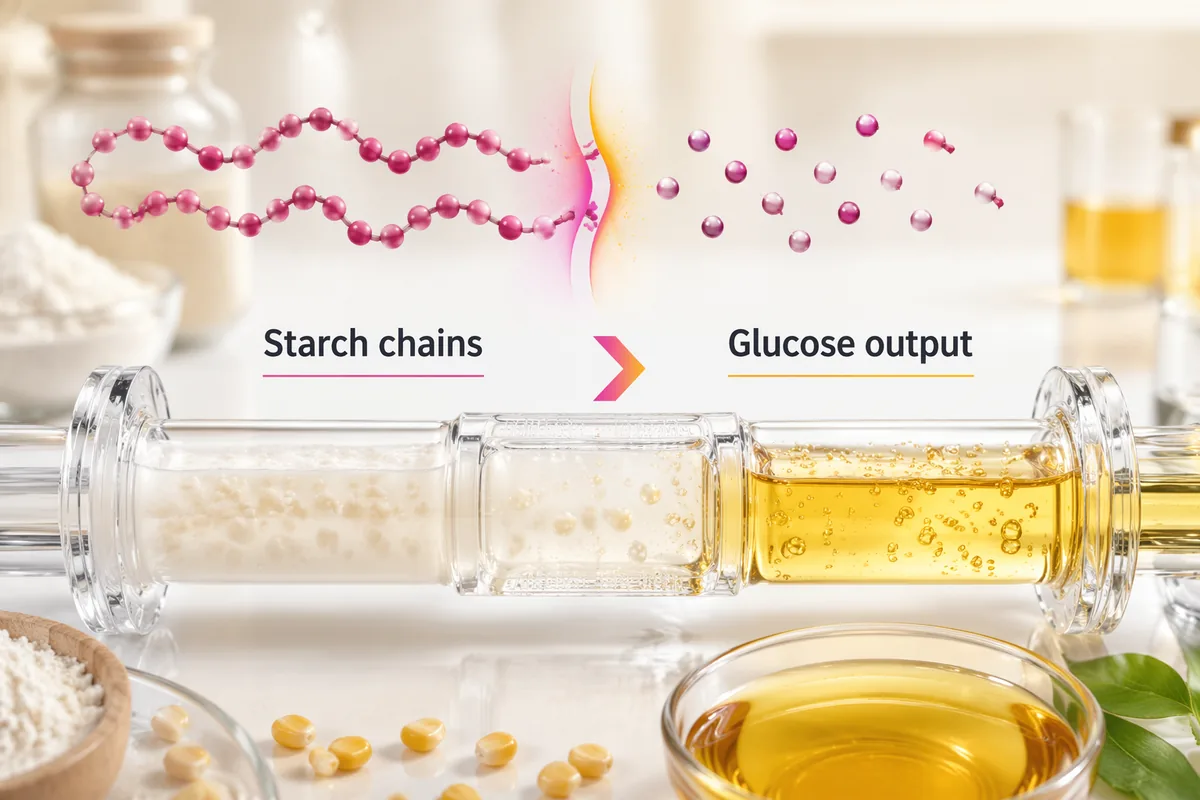
glucoamylase supplier for glucose syrup dosage, pH, and temperature infographic showing yield, QC, and pilot checks

Why Glucoamylase Matters in Glucose Syrup Troubleshooting

In glucose syrup production, liquefied starch contains dextrins, maltose, maltotriose, and longer oligosaccharides that must be saccharified into glucose. Glucoamylase, also called AMG enzyme or maltase enzyme in some buying specifications, hydrolyzes alpha-1,4 bonds from non-reducing ends and can also act slowly on alpha-1,6 branch points. When conversion stalls, the problem is often not only enzyme activity. It may involve poor liquefaction, excessive dry solids, incorrect pH correction, temperature drift, calcium carryover, contamination, or insufficient residence time. A qualified glucoamylase supplier for glucose syrup should help review the whole process, not simply quote a drum price. For industrial glucoamylase glucose syrup applications, practical troubleshooting starts with actual mash data, including starch source, DE after liquefaction, dry solids, saccharification profile, filtration behavior, and final glucose target.

Best used after starch liquefaction, not as a liquefaction enzyme. • Key performance indicators include DE, glucose percentage, and residual DP2/DP3. • Supplier support should include process-fit recommendations and pilot trials.

Typical Dosage Bands and How to Optimize Them

A practical starting point for industrial glucoamylase starch glucose syrup trials is often 0.3–1.2 kg of enzyme preparation per metric ton of dry starch, or the equivalent liquid dosage stated on the supplier TDS. The correct dose depends on enzyme activity units, substrate, liquefaction DE, dry solids, saccharification time, and the desired glucose content. A low dose may leave elevated maltose and higher saccharides; an excessive dose may not add economic value once conversion plateaus. Run dosage curves at the plant’s normal dry solids and residence time, then compare glucose yield, filtration, color, fermentation risk, and cost-in-use. A maltase enzyme supplier for glucose syrup should state the activity method, recommended addition point, storage conditions, and expected performance window so procurement and production teams can compare offers on equivalent process value.

Trial at low, mid, and high dosage levels before scaling. • Evaluate cost per ton of syrup solids, not cost per kg enzyme. • Confirm whether dosage is based on wet enzyme, dry starch, or syrup solids.

glucoamylase supplier for glucose syrup saccharification diagram with starch reaction flow and pH temperature curve

pH and Temperature Control for Saccharification

For many fungal glucoamylase starch for glucose syrup processes, saccharification is commonly controlled around pH 4.0–4.5 and 58–62°C. Some industrial variants may tolerate pH 4.5–5.5 or temperatures above 62°C, but the approved range must come from the product TDS. If pH is too high, conversion can slow and microbial risk may increase over long holding times. If pH is too low, enzyme stability and downstream neutralization costs can be affected. Temperature below the optimum may require longer saccharification; temperature above the stability limit can denature enzyme and cause incomplete conversion. Good practice is to calibrate pH probes at process temperature, verify tank temperature mapping, and log actual hold time. For troubleshooting, compare lab beaker saccharification under controlled conditions against plant tank results to separate enzyme issues from mixing and control issues.

Typical fungal AMG window: pH 4.0–4.5, 58–62°C. • Avoid relying on room-temperature pH readings without correction. • Check hot spots, dead zones, and steam control overshoot.

QC Checks That Reveal Conversion Problems

Quality control should measure both conversion progress and syrup quality. DE alone is useful but incomplete; HPLC or ion chromatography can show glucose, maltose, maltotriose, and higher saccharide distribution. A falling DP2/DP3 profile with rising glucose confirms that the enzyme is working. Residual starch or poor liquefaction can be checked by iodine test, viscosity trend, and filtration behavior. During trials with a glucoamylase starch supplier for glucose syrup, collect time-point samples such as 0, 12, 24, 36, and 48 hours depending on the plant residence time. Record pH, temperature, dry solids, enzyme lot number, and addition rate with each sample. This data supports root-cause analysis when final glucose misses target, syrup color rises, or saccharification time becomes inconsistent between batches.

Track DE plus glucose and residual oligosaccharides. • Use iodine testing to detect incomplete liquefaction or residual starch. • Retain enzyme lot numbers and process logs for every trial.

Supplier Qualification for Industrial Buyers

A reliable glucoamylase supplier for glucose syrup should provide a current COA for each lot, a TDS with activity definition and application guidance, and an SDS for safe handling. The COA should identify activity, appearance, production lot, manufacturing or release date, and any relevant microbiological or heavy metal limits the supplier controls. The TDS should state storage temperature, shelf life, recommended pH and temperature range, and dosage basis. For B2B qualification, ask for representative samples, pilot validation support, packaging options, lead time, change-control communication, and documentation alignment with your internal purchasing requirements. Avoid selecting only on quoted activity if the activity method is different between suppliers. For industrial maltase enzyme glucose syrup use, the best supplier is the one that can prove consistent conversion and predictable cost-in-use under your process conditions.

Request COA, TDS, and SDS before purchase approval. • Compare activity methods before comparing prices. • Confirm lot traceability, packaging, lead time, and storage needs.

Pilot Validation Before Full-Scale Switching

Before changing enzyme source, run a structured pilot or side-by-side plant trial. Use the same liquefied starch, dry solids, pH, temperature, residence time, and sampling method for each candidate product. Test at least three dosage points and include your current enzyme as the control if available. The main decision metrics should be final glucose percentage, time to target, residual DP profile, filtration performance, syrup color, microbial indicators if relevant, and total enzyme cost per ton of dry solids. A strong glucoamylase for glucose syrup program should also consider downstream evaporation, ion exchange, carbon treatment, and customer syrup specification. Pilot validation reduces the risk of unexpected under-conversion, slower tank turns, or hidden processing costs after a purchasing change.

Use current enzyme performance as the control benchmark. • Keep substrate and operating conditions identical across trials. • Approve scale-up only after analytical and economic review.

Technical Buying Checklist

Buyer Questions

Low yield can result from poor liquefaction, incorrect pH, temperature inactivation, high dry solids limiting mass transfer, short residence time, or enzyme activity loss during storage. Increasing dosage may not fix these root causes. Check liquefaction DE, iodine result, saccharification pH and temperature logs, HPLC sugar profile, and enzyme lot COA before assuming the product is underperforming.

In industrial purchasing, the terms can overlap, but they are not always identical. Glucoamylase, or AMG enzyme, is the standard enzyme used to release glucose from liquefied starch dextrins. Maltase activity mainly refers to maltose hydrolysis. For glucose syrup, specify the required industrial glucoamylase performance, activity method, pH and temperature range, and application data.

Compare suppliers using the same substrate, dosage basis, pH, temperature, dry solids, and residence time. Review COA, TDS, SDS, activity method, storage stability, lead time, and batch consistency. Then calculate cost-in-use using final glucose yield and time to target. A lower price per kg may be more expensive if it requires higher dosage or longer saccharification.

Request a current COA, TDS, and SDS at minimum. The COA should show lot-specific activity and controlled quality parameters. The TDS should include application guidance, dosage basis, pH and temperature range, storage conditions, and shelf life. The SDS supports safe handling and internal EHS review. For supplier approval, also request sample availability and traceability details.

Related Search Themes

glucoamylase starch supplier for glucose syrup, maltase enzyme supplier for glucose syrup, industrial glucoamylase starch glucose syrup, industrial glucoamylase glucose syrup, glucoamylase starch for glucose syrup, glucoamylase for glucose syrup

Maltase (Glucoamylase for Maltodextrin) for Research & Industry

Need Maltase (Glucoamylase for Maltodextrin) for your lab or production process?

ISO 9001 certified · Food-grade & research-grade · Ships to 80+ countries

Request a Free Sample →

Frequently Asked Questions

What causes low glucose yield even when glucoamylase dosage is increased?

Low yield can result from poor liquefaction, incorrect pH, temperature inactivation, high dry solids limiting mass transfer, short residence time, or enzyme activity loss during storage. Increasing dosage may not fix these root causes. Check liquefaction DE, iodine result, saccharification pH and temperature logs, HPLC sugar profile, and enzyme lot COA before assuming the product is underperforming.

Is maltase enzyme the same as glucoamylase for glucose syrup production?

In industrial purchasing, the terms can overlap, but they are not always identical. Glucoamylase, or AMG enzyme, is the standard enzyme used to release glucose from liquefied starch dextrins. Maltase activity mainly refers to maltose hydrolysis. For glucose syrup, specify the required industrial glucoamylase performance, activity method, pH and temperature range, and application data.

How should we compare two glucoamylase suppliers?

Compare suppliers using the same substrate, dosage basis, pH, temperature, dry solids, and residence time. Review COA, TDS, SDS, activity method, storage stability, lead time, and batch consistency. Then calculate cost-in-use using final glucose yield and time to target. A lower price per kg may be more expensive if it requires higher dosage or longer saccharification.

What documents should be requested before purchasing AMG enzyme?

Request a current COA, TDS, and SDS at minimum. The COA should show lot-specific activity and controlled quality parameters. The TDS should include application guidance, dosage basis, pH and temperature range, storage conditions, and shelf life. The SDS supports safe handling and internal EHS review. For supplier approval, also request sample availability and traceability details.

🧬

Ready to source?

Turn This Guide Into a Supplier Brief Request a glucoamylase sample, COA/TDS/SDS package, and pilot trial support for your glucose syrup line.

Contact Us to Contribute

[email protected]