
Industrial Glucoamylase Maltodextrin: Specification Checklist for Buyers

Compare industrial glucoamylase for maltodextrin by activity, pH, temperature, dosage, COA/TDS/SDS, pilot validation, and cost-in-use.
Industrial Glucoamylase Maltodextrin: Specification Checklist for Buyers

A practical B2B guide for comparing maltase/glucoamylase options for maltodextrin processing, glucose syrup conversion, and brewing-related starch saccharification.

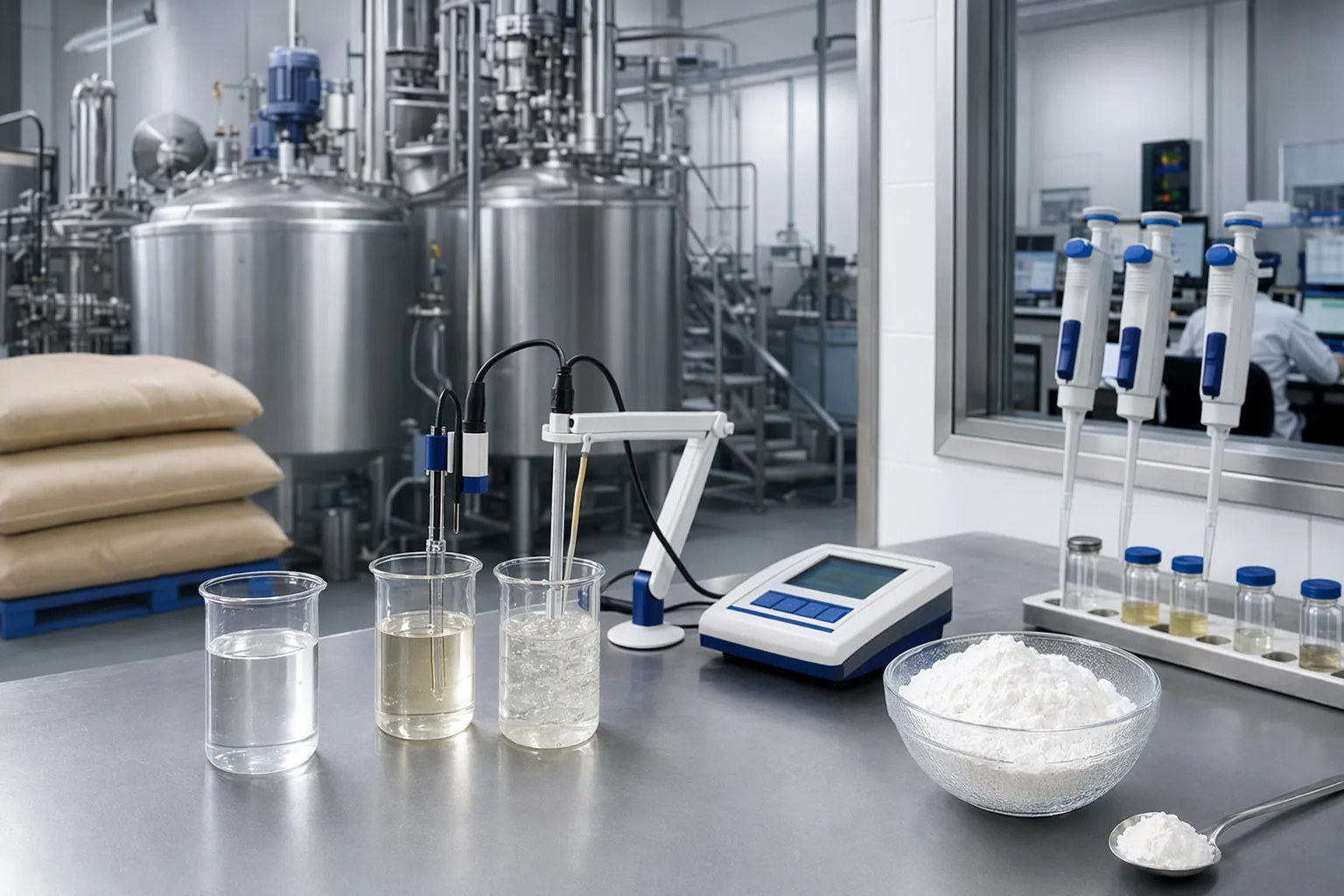
industrial glucoamylase maltodextrin specification checklist with enzyme, process conditions, and supplier criteria

Where Glucoamylase Fits in Maltodextrin Processing

Industrial glucoamylase maltodextrin decisions should start with the product target. Maltodextrin is usually produced by controlled starch liquefaction and hydrolysis, commonly keeping DE below 20. Because glucoamylase releases glucose from non-reducing ends of starch dextrins, overuse can push the carbohydrate profile toward glucose syrup rather than maltodextrin. For this reason, an industrial glucoamylase starch maltodextrin application is often a controlled, limited conversion step, a correction step, or a saccharification stage when maltodextrin is used as feedstock for industrial glucoamylase glucose syrup production. Buyers should compare enzymes by how predictably they convert maltose and dextrins under their actual solids, pH, temperature, and residence time. The right supplier will help define whether the need is a maltase enzyme effect, a true AMG enzyme saccharification profile, or a broader starch-processing enzyme system.

Confirm whether the target is maltodextrin, glucose syrup, or an intermediate DE stream. • Avoid excessive saccharification when low sweetness and low DE are required. • Use lab and pilot data to define stop points and inactivation conditions.

Specification Priorities When Comparing Suppliers

A glucoamylase supplier for maltodextrin should provide more than a headline activity number. Ask for the activity unit definition, assay substrate, assay pH, assay temperature, and batch-to-batch tolerance so products can be compared fairly. The Technical Data Sheet should describe appearance, enzyme source type, recommended pH and temperature range, dosage band, storage, shelf life, and handling notes. The COA should confirm lot-specific activity and agreed quality parameters, while the SDS should support safe receiving, storage, and plant handling. If evaluating industrial maltase enzyme maltodextrin options, clarify whether the product primarily hydrolyzes maltose or also attacks dextrins efficiently. For industrial glucoamylase starch maltodextrin procurement, a qualified supplier should support pilot trials and help translate laboratory activity into practical dosage under plant solids and process time.

Request COA, TDS, SDS, and activity assay details. • Compare products using equivalent activity units and process conditions. • Check lot traceability, packaging format, and recommended storage temperature. • Ask for sample quantities suitable for bench and pilot evaluation.

industrial glucoamylase maltodextrin process diagram showing starch saccharification, pH, temperature, and glucose yield

Typical Process Conditions for Pilot Screening

Most industrial glucoamylase starch applications are screened in mildly acidic conditions, often around pH 4.0 to 5.0, with temperatures commonly near 55 to 65°C, depending on the enzyme preparation and substrate. Dosage is normally optimized through trials rather than fixed globally; a practical screening band may begin around 0.05 to 0.40 kg enzyme preparation per metric ton of dry starch solids, adjusted for declared activity, solids level, target DE, and residence time. For maltodextrin, use conservative dosages and short holds first, because glucose formation can rise quickly after liquefaction. Key checks include DE, glucose, maltose, DP profile, viscosity, iodine reaction when relevant, filtration behavior, and final moisture after drying. Pilot validation should also verify pH adjustment needs, enzyme inactivation temperature, and whether residual activity affects downstream storage or blending.

Start with small dosage increments and time-course sampling. • Measure carbohydrate profile, not only DE. • Confirm enzyme inactivation before drying, storage, or blending. • Run trials at actual plant solids where possible.

Maltodextrin Versus Glucose Syrup and Brewing Needs

Comparison is important because the same enzyme family may be purchased for different outcomes. Industrial glucoamylase glucose syrup production usually seeks high fermentable sugar or high glucose yield, so longer saccharification and stronger AMG enzyme performance are desirable. Industrial glucoamylase starch glucose syrup trials may use maltodextrin or liquefied starch as the substrate, with DE and glucose yield as central KPIs. In contrast, maltodextrin applications may require controlled conversion, lower sweetness, and stable powder properties. Industrial glucoamylase starch brewing and industrial glucoamylase brewing applications prioritize fermentability, attenuation, and compatibility with mash or adjunct processing. A supplier that understands these differences can help prevent over-specification. Buyers should define the end market, process constraints, and analytical targets before requesting quotations, because the cheapest enzyme may be unsuitable if it changes the carbohydrate profile too aggressively.

Maltodextrin: controlled DE and powder functionality. • Glucose syrup: higher glucose yield and saccharification efficiency. • Brewing: fermentability, attenuation, and process compatibility. • Supplier comparisons should be application-specific.

Cost-in-Use and Supplier Qualification

For industrial glucoamylase maltodextrin procurement, price per kilogram is only one part of the comparison. Cost-in-use should include activity strength, effective dosage, conversion time, yield impact, energy use, pH correction, filtration performance, downtime risk, and the cost of off-spec product. A higher-priced enzyme may be economical if it reaches the target DE faster, uses a lower dosage, or creates a more consistent carbohydrate profile. Supplier qualification should cover documentation quality, lot consistency, sample responsiveness, technical support, lead time, packaging integrity, and ability to support scale-up. Buyers should request recent COA examples, current TDS and SDS, recommended QC methods, and storage guidance. Before approval, run a pilot batch with agreed acceptance criteria, then confirm commercial performance across at least one normal production cycle using the plant’s own raw material and operating limits.

Calculate cost per ton of dry solids processed, not only enzyme price. • Include yield, cycle time, rework, and QC burden in comparisons. • Qualify suppliers through documentation, pilot results, and delivery reliability. • Set acceptance criteria before the commercial trial begins.

Technical Buying Checklist

Buyer Questions

No. Maltodextrin is commonly made through controlled starch hydrolysis, often with alpha-amylase, while keeping DE below the desired limit. Glucoamylase may be used when a processor wants controlled glucose formation, maltose reduction, or conversion of maltodextrin feedstock toward glucose syrup. Because glucoamylase can increase sweetness and DE, it should be validated carefully for maltodextrin applications.

A qualified supplier should provide a lot-specific COA, current TDS, SDS, activity unit definition, recommended pH and temperature range, dosage guidance, storage conditions, shelf life, and packaging information. For industrial glucoamylase starch maltodextrin use, also request pilot support, suggested QC methods, and confirmation that the enzyme is suitable for the intended industrial food or fermentation process.

Compare cost-in-use, not only price per kilogram. Normalize for declared activity, assay method, recommended dosage, conversion time, yield, target DE, glucose profile, and the risk of off-spec product. Run both enzymes on the same substrate under identical pH, temperature, solids, and residence time. The better AMG enzyme is the one that reliably reaches your specification at the lowest total process cost.

Use time-course trials at plant-relevant solids, pH, and temperature. Measure DE, glucose, maltose, viscosity, filtration behavior, color, odor, microbial indicators, and residual enzyme activity if it can affect storage or blending. For maltodextrin, include conservative dosage levels so the process does not overshoot into glucose syrup specifications. Confirm inactivation conditions before full-scale approval.

Related Search Themes

industrial glucoamylase starch maltodextrin, industrial maltase enzyme maltodextrin, industrial glucoamylase starch glucose syrup, industrial glucoamylase starch brewing, industrial glucoamylase glucose syrup, industrial glucoamylase brewing

Maltase (Glucoamylase for Maltodextrin) for Research & Industry

Need Maltase (Glucoamylase for Maltodextrin) for your lab or production process?

ISO 9001 certified · Food-grade & research-grade · Ships to 80+ countries

Request a Free Sample →

Frequently Asked Questions

Is glucoamylase always required to make maltodextrin?

No. Maltodextrin is commonly made through controlled starch hydrolysis, often with alpha-amylase, while keeping DE below the desired limit. Glucoamylase may be used when a processor wants controlled glucose formation, maltose reduction, or conversion of maltodextrin feedstock toward glucose syrup. Because glucoamylase can increase sweetness and DE, it should be validated carefully for maltodextrin applications.

What documents should an industrial glucoamylase supplier provide?

A qualified supplier should provide a lot-specific COA, current TDS, SDS, activity unit definition, recommended pH and temperature range, dosage guidance, storage conditions, shelf life, and packaging information. For industrial glucoamylase starch maltodextrin use, also request pilot support, suggested QC methods, and confirmation that the enzyme is suitable for the intended industrial food or fermentation process.

How should we compare two AMG enzyme quotations?

Compare cost-in-use, not only price per kilogram. Normalize for declared activity, assay method, recommended dosage, conversion time, yield, target DE, glucose profile, and the risk of off-spec product. Run both enzymes on the same substrate under identical pH, temperature, solids, and residence time. The better AMG enzyme is the one that reliably reaches your specification at the lowest total process cost.

What pilot tests are most useful before purchasing?

Use time-course trials at plant-relevant solids, pH, and temperature. Measure DE, glucose, maltose, viscosity, filtration behavior, color, odor, microbial indicators, and residual enzyme activity if it can affect storage or blending. For maltodextrin, include conservative dosage levels so the process does not overshoot into glucose syrup specifications. Confirm inactivation conditions before full-scale approval.

🧬

Related: Maltase Enzyme for Maltodextrin Conversion

Turn This Guide Into a Supplier Brief Request a glucoamylase specification review, sample plan, and cost-in-use comparison for your maltodextrin process. See our application page for Maltase Enzyme for Maltodextrin Conversion at /applications/maltodextrin-conversion/ for specs, MOQ, and a free 50 g sample.

Contact Us to Contribute

[email protected]