Maltodextrin DE Control: When a Maltase Step Pays and Where to Stop It
For maltodextrin and spray-dried carbohydrate producers: when a maltase/glucoamylase step helps you hit a DE specification, how to set the stop point, and the QC to run before scale-up.
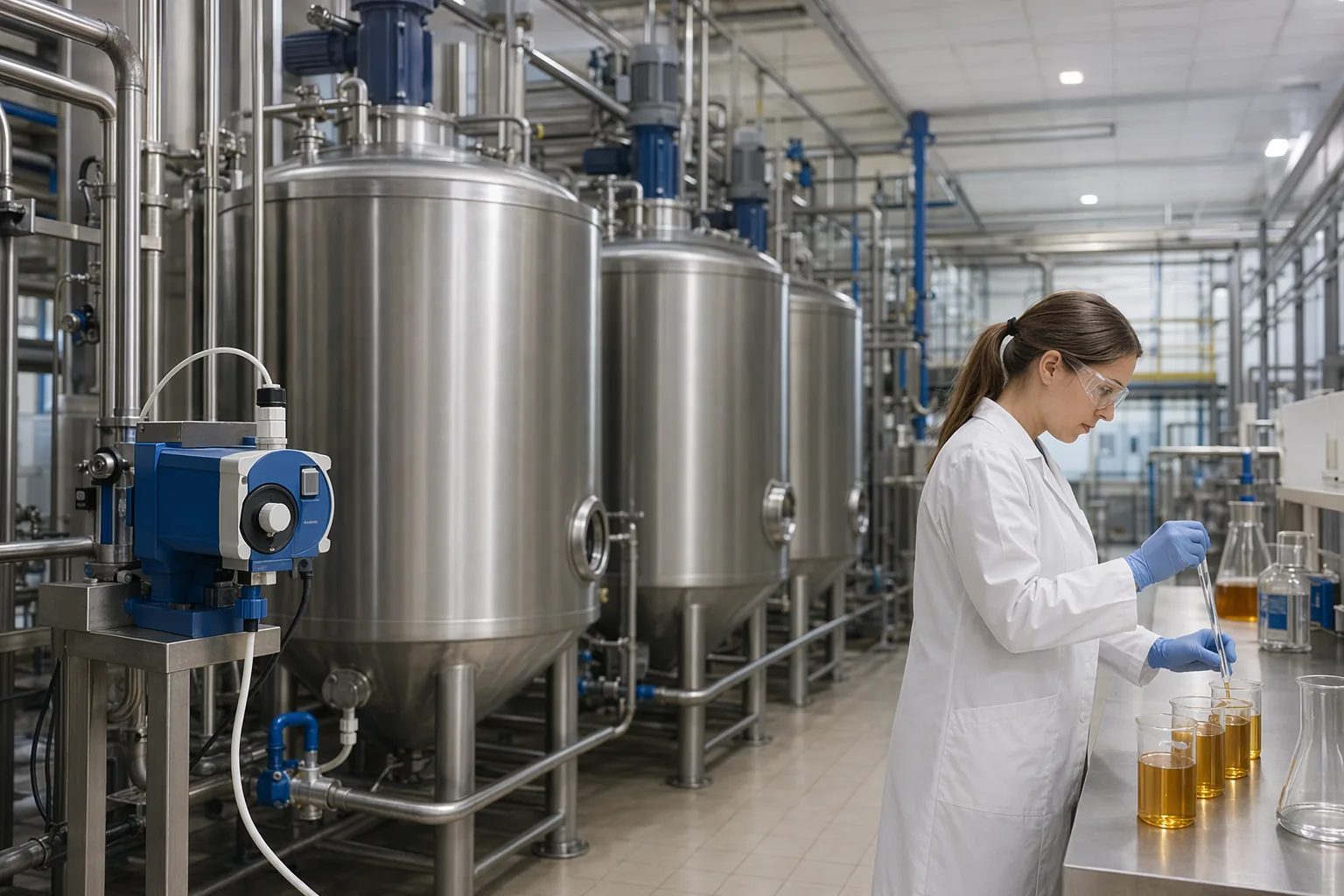
Maltodextrin is sold on its DE specification. Every glucose unit released past the target moves a batch toward a sweeter, more hygroscopic product that your customer did not order. A maltase/glucoamylase step is a precision tool for that problem: after liquefaction it lifts DE and reshapes the sugar profile, but only when the plant controls where it stops.
This guide is for maltodextrin producers, carbohydrate ingredient blenders and the resellers who supply them. Our grade works at pH 4.0–5.5 and 55°C–65°C and comes as brown liquid or light brown powder at 100,000–300,000 U/g; send your product, quantity and destination and we quote the format that fits your line.
When a Maltase Step Pays in Maltodextrin
Many maltodextrin lines reach their DE by liquefaction alone. A maltase/glucoamylase step earns its place when the specification needs a controlled DE lift, a tighter spread of oligosaccharides, or more fermentable sugar for a particular customer. Because the enzyme releases glucose from the non-reducing ends of dextrins, it keeps working as long as it has time, temperature and substrate. That is its value and its risk: the same step that corrects a low-DE batch can push the next one out of the maltodextrin range.
Use it when a controlled DE increase is required. • Do not run it as a general yield booster. • Judge it against the finished-product specification your customer buys on.
Setting the Stop Point
Add the enzyme after liquefaction, once the stream is cooled and adjusted into the grade's working range of pH 4.0–5.5 and 55°C–65°C. Express the dose against dry solids and the activity of the grade you use, start low and step up: activity units differ between grades and suppliers, so there is no universal dose to copy from another plant. Sample often in early trials, because DE can climb quickly once accessible dextrins are present. When the batch reaches its endpoint, stop the reaction by heat inactivation, a pH shift or a fast move to the next process step, and confirm that inactivation works at your real solids and flow. On continuous lines, measure the actual residence time instead of trusting the nominal tank volume.
Hold pH and temperature tightly during trials. • Pair every dose step with a DE check. • Prove the stop method before scale-up.
What Over-Conversion Costs You
Overshooting the DE target is not a small drift. As glucose rises, sweetness, hygroscopicity and browning potential rise with it. In spray-dried powder that shows up as caking, poorer dispersibility and moisture pick-up in storage, and a lot that misses specification has to be blended off, reworked or sold below grade. For a reseller, an off-spec lot means a complaint from the formulator downstream. That is why the business case for the maltase step rests on endpoint control, not on how much glucose the enzyme can make.
QC Before You Approve the Step
Track DE and glucose together; DE alone hides a shifting sugar profile. Where you can, run a carbohydrate profile by HPLC. Add viscosity, pH, dry solids, color, turbidity and filtration rate, and for spray-dried maltodextrin check moisture, bulk density, solubility, dispersibility and caking tendency. Check residual activity after inactivation if the product meets heat or long storage downstream, and keep a no-enzyme control batch so the effect of the step is clear. Ask for representative samples from commercial lots, not only laboratory material, before you approve a grade for routine production.
Technical Buying Checklist
Your target DE band and the DE after liquefaction. • Starch source and dry solids. • Batch or continuous operation, and the real residence time. • The inactivation method you can run. • Liquid or powder format for your dosing system. • Pack size that suits your usage: 25 kg drums, 200 L drums or 1000 L IBC.
Request a Quote for Your Maltodextrin Line
Send the product (liquid or powder grade), the quantity per order or per year and the destination country, with your target DE, starch source and process pH and temperature. The minimum order is 25 kg and the grade has a 12-month shelf life. Maltodextrin producers, ingredient blenders and resellers are quoted per order, and a free sample is included with qualified inquiries.
Maltase (Glucoamylase for Maltodextrin) for Research & Industry
Need Maltase (Glucoamylase for Maltodextrin) for your lab or production process?
ISO 9001 certified · Food-grade & research-grade · Ships to 80+ countries
Frequently Asked Questions
Is a maltase/glucoamylase step always needed to make maltodextrin?
No. Many lines reach their DE with liquefaction alone. The step is used when the specification needs a controlled DE lift or a specific sugar profile, and it must be stopped before the product leaves the maltodextrin range.
How do we stop the reaction at the target DE?
Plan the stop before the trial: heat inactivation, a pH shift or a fast move to the next step. Sample often as you approach the endpoint, and confirm that the stop works at your real solids and flow, not only in the laboratory.
What dose should we start with?
There is no universal dose, because activity units, starch source, dry solids, pH, temperature and holding time all change the answer. Start low, step up while you track DE and the sugar profile, and keep the lowest dose that meets your specification batch after batch.
Can the same grade serve maltodextrin and glucose syrup?
The same enzyme family is used for both, but the end points differ: high-glucose lines run the conversion much further, while maltodextrin needs a firm stop. Validate dose, holding time and stop method separately for each product.
Which packs and minimum order apply?
The grade is supplied in 25 kg drums, 200 L drums and 1000 L IBC, with a minimum order of 25 kg and a 12-month shelf life.
Related: Maltase Enzyme for Maltodextrin Conversion
Request a maltase/glucoamylase sample, COA, TDS, SDS, and pilot dosage guidance for your maltodextrin process. See our application page for Maltase Enzyme for Maltodextrin Conversion for specs, MOQ, and a free 50 g sample.
Contact Us to Contributehello@mail.enzymeoffer.com